
Ohm's Law, Resistivity & Temperature · Temperature dependence of resistance
In case of thermistor, which one of the following statements is 'WRONG'?
Show answer and solution
Answer: (b)
Loading the solution…
Home›Practice Hub›Chapters›Current Electricity›Ohm's Law, Resistivity & Temperature
Current Electricity PYQs · MHT CET · JEE Main · NEET
Ohm's Law, Resistivity & Temperature · Temperature dependence of resistance
In case of thermistor, which one of the following statements is 'WRONG'?
Answer: (b)
Ohm's Law, Resistivity & Temperature · Temperature dependence of resistance
Which of the following graph represents the temperature (T) dependence of resistivity () of a semiconductor?
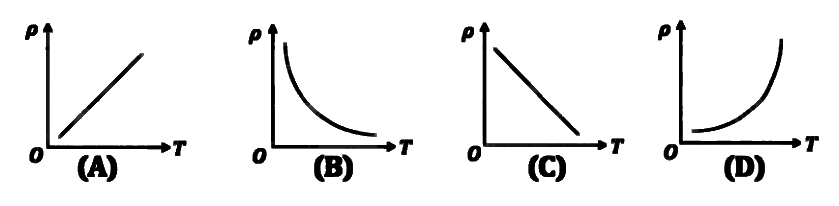
Answer: (b)
Ohm's Law, Resistivity & Temperature · Resistivity: R = ρl/A
Consider two circuits, (A) and (B), each having two resistors. One of them has a positive temperature coefficient of resistance, , while the other one has a negative temperature coefficient, , as shown in the figure. The currents through these circuits are denoted by and . At initial temperature, the resistance of the two resistors is . As the temperature is increased, the correct option that describes the variation of current in these circuits is:
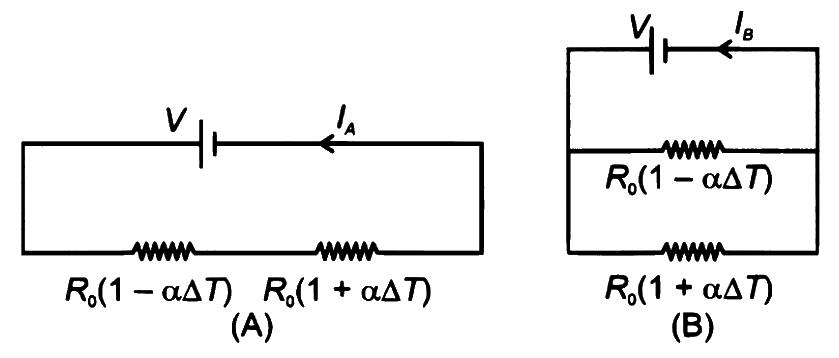
Answer: (b)
Ohm's Law, Resistivity & Temperature · Colour code
A resistor of with a tolerance of and another of with a tolerance of are connected in series. The tolerance of combination is about
Answer: (b)
Ohm's Law, Resistivity & Temperature · Temperature dependence of resistance
Which of the following resistivity ( ) temperature ( T) curves is most suitable to be used in wire bound standard resistors?
Answer: (d)
Ohm's Law, Resistivity & Temperature · Temperature dependence of resistance
At room temperature , the resistance of a heating element is . The temperature coefficient of the material is . The temperature of the element, when its resistance is , is __________ .
Numerical answer type. Work it out, then open the answer.
Answer: 1027
Ohm's Law, Resistivity & Temperature · Ohm's law & V–I graphs
To determine the resistance (R) of a wire, a circuit is designed below. The characteristic curve for this circuit is plotted for the voltmeter and the ammeter readings as shown in figure. The value of is _________ .
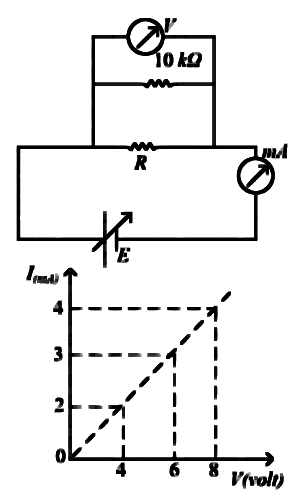
Numerical answer type. Work it out, then open the answer.
Answer: 2500
Ohm's Law, Resistivity & Temperature · Resistivity: R = ρl/A
Two wires and are made up of the same material and have the same mass. Wire has radius of and wire has radius of . The resistance of wire is . The resistance of wire is ________ .
Numerical answer type. Work it out, then open the answer.
Answer: 32
Ohm's Law, Resistivity & Temperature · Stretching & reshaping a wire
A wire of resistance and radius is stretched till its radius became . If new resistance of the stretched wire is , then value of is ________.
Numerical answer type. Work it out, then open the answer.
Answer: 16
Ohm's Law, Resistivity & Temperature · Temperature dependence of resistance
Two conductors have the same resistances at but their temperature coefficients of resistance are and . The respective temperature coefficients for their series and parallel combinations are:
Answer: (b)
Ohm's Law, Resistivity & Temperature · Temperature dependence of resistance
An electric toaster has resistance of at room temperature . The toaster is connected to a supply. If the current flowing through it reaches , the temperature attained by toaster is around: ( if )
Answer: (d)
Ohm's Law, Resistivity & Temperature · Temperature dependence of resistance
Resistance of a wire at and is found to be and respectively. The temperature in Kelvin scale is _________.
Numerical answer type. Work it out, then open the answer.
Answer: 748
Ohm's Law, Resistivity & Temperature · Resistivity: R = ρl/A
A certain wire has resistance . The resistance of another wire of same material and equal length but of diameter thrice the diameter of A will be:
Answer: (b)
Ohm's Law, Resistivity & Temperature · Resistivity: R = ρl/A
A rectangular parallelopiped is measured as . If its specific resistance is , then the resistance between its two opposite rectangular faces will be ___________ .
Numerical answer type. Work it out, then open the answer.
Answer: 3
Ohm's Law, Resistivity & Temperature · Stretching & reshaping a wire
The resistance of a wire is 5 . Its new resistance in ohm if stretched to 5 times of its original length will be:
Answer: (d)
Ohm's Law, Resistivity & Temperature · Temperature dependence of resistance
The resistance of platinum wire at is and at . The temperature coefficient of resistance of the wire is:
Answer: (b)
Ohm's Law, Resistivity & Temperature · Colour code
Resistance of a carbon resistor determined from colour codes is . The colour of third band must be:
Answer: (b)
Ohm's Law, Resistivity & Temperature · Resistivity: R = ρl/A
A uniform metallic wire carries a current 2 A, when 3.4 V battery is connected across it. The mass of uniform metallic wire is 8.92 10 kg, density is 8.92 10 kg/m and resistivity is 1.7 10. The length of wire is:
Answer: (d)
Ohm's Law, Resistivity & Temperature · Resistivity: R = ρl/A
The current flowing through a conductor connected across a source is and 1.2 at and respectively. The current flowing through the conductor at will be ___________ .
Numerical answer type. Work it out, then open the answer.
Answer: 15
Ohm's Law, Resistivity & Temperature · Resistivity: R = ρl/A
A hollow cylindrical conductor has length of 3.14 m, while its inner and outer diameters are 4 mm and 8 mm respectively. The resistance of the conductor is . If the resistivity of the material is , the value of is ___________.
Numerical answer type. Work it out, then open the answer.
Answer: 2
Ohm's Law, Resistivity & Temperature · Stretching & reshaping a wire
A wire of resistance is melted and drawn in a wire of one-fourth of its length. The new resistance of the wire will be
Answer: (d)
Ohm's Law, Resistivity & Temperature · Stretching & reshaping a wire
The length of a metallic wire is increased by and its area of cross section is reduced by . The percentage change in resistance of the metallic wire is __________.
Numerical answer type. Work it out, then open the answer.
Answer: 25
Ohm's Law, Resistivity & Temperature · Stretching & reshaping a wire
If a copper wire is stretched to increase its length by 20%. The percentage increase in resistance of the wire is __________%.
Numerical answer type. Work it out, then open the answer.
Answer: 44
Ohm's Law, Resistivity & Temperature · Resistivity: R = ρl/A
The reciprocal of resistance is:
Answer: (a)
Ohm's Law, Resistivity & Temperature · Stretching & reshaping a wire
A wire of resistance R1 is drawn out so that its length is increased by twice of its original length. The ratio of new resistance to original resistance is:
Answer: (a)
Ohm's Law, Resistivity & Temperature · Stretching & reshaping a wire
An aluminium wire is stretched to make its length, 0.4% larger. The percentage change in resistance is:
Answer: (c)
Ohm's Law, Resistivity & Temperature · Stretching & reshaping a wire
The length of a given cylindrical wire is increased to double of its original length. The percentage increase in the resistance of the wire will be ____________ %.
Numerical answer type. Work it out, then open the answer.
Answer: 300
Ohm's Law, Resistivity & Temperature · Temperature dependence of resistance
Given below are two statements: one is labelled as Assertion A and the other is labelled as Reason R.
Assertion A: Alloys such as constantan and manganin are used in making standard resistance coils. Reason R: Constantan and manganin have very small value of temperature coefficient of resistance. In the light of the above statements, choose the correct answer from the options given below.
Answer: (a)
Ohm's Law, Resistivity & Temperature · Temperature dependence of resistance
Resistance of the wire is measured as 2 and 3 at 10C and 30C respectively. Temperature co- efficient of resistance of the material of the wire is:
Answer: (a)
Ohm's Law, Resistivity & Temperature · Resistivity: R = ρl/A
The variation of applied potential and current flowing through a given wire is shown in figure. The length of wire is 31.4 cm. The diameter of wire is measured as 2.4 cm. The resistivity of the given wire is measured as x 103 cm. The value of x is ____________. [Take = 3.14]
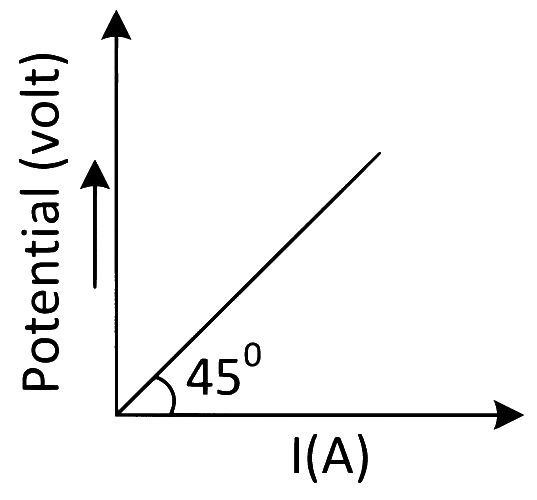
Numerical answer type. Work it out, then open the answer.
Answer: 144
Ohm's Law, Resistivity & Temperature · Stretching & reshaping a wire
A long wire is broken into two unequal parts and . The part of the wire is streched into another wire W. Length of is twice the length of and the resistance of is twice that of . Find the ratio of length of and .
Answer: (b)
Ohm's Law, Resistivity & Temperature · Temperature dependence of resistance
The resistance of a conductor at 15C is 16 and at 100 C is 20. What will be the temperature coefficient of resistance of the conductor?
Answer: (c)
Ohm's Law, Resistivity & Temperature · Colour code
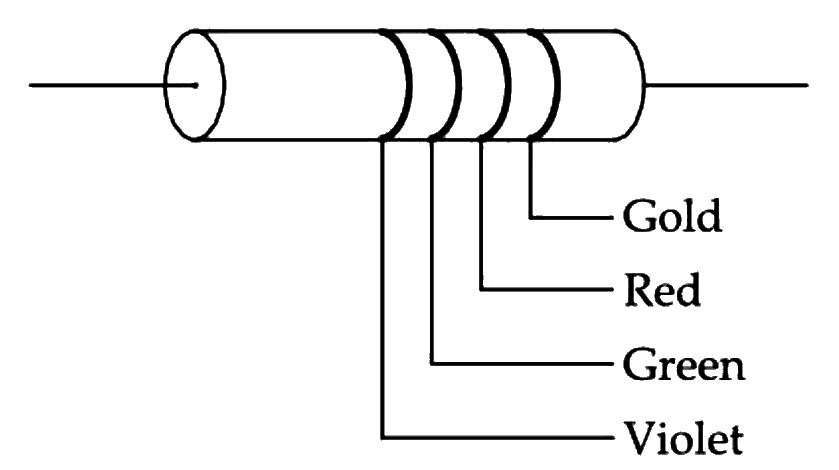
The Colour coding on a carbon resistor is shown in the given figure. The resistance value of the given resistor is:
Answer: (d)
Ohm's Law, Resistivity & Temperature · Resistivity: R = ρl/A
For the circuit shown, the value of current at time t = 3.2 s will be _________ A.
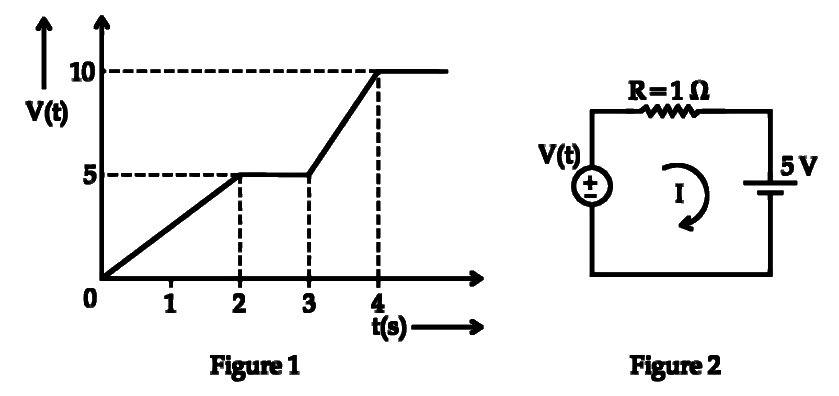
[Voltage distribution V(t) is shown by Fig. (1) and the circuit is shown in Fig. (2)]
Numerical answer type. Work it out, then open the answer.
Answer: 1
Ohm's Law, Resistivity & Temperature · Stretching & reshaping a wire
A wire of 1 has a length of 1 m. It is stretched till its length increases by 25%. The percentage change in resistance to the nearest integer is:
Answer: (d)
Ohm's Law, Resistivity & Temperature · Temperature dependence of resistance
What equal length of an iron wire and a copper-nickel alloy wire, each of 2 mm diameter connected parallel to give an equivalent resistance of 3?
(Given resistivities of iron and copper-nickel alloy wire are 12 cm and 51 cm respectively)
Answer: (b)
Ohm's Law, Resistivity & Temperature · Resistivity: R = ρl/A
Two solid conductors are made up of same material, have same length and same resistance. One of them has a circular cross section of area and the other one has a square cross section of area . The ratio is
Answer: (c)
Ohm's Law, Resistivity & Temperature · Resistivity: R = ρl/A
Consider four conducting materials copper, tungsten, mercury and aluminium with resistivity C, T, M and A respectively. Then:
Answer: (b)
Ohm's Law, Resistivity & Temperature · Temperature dependence of resistance
Which of the following graph represents the variation of resistivity () with temperature (T) for copper?
Answer: (b)
Ohm's Law, Resistivity & Temperature · Temperature dependence of resistance
The solids which have the negative temperature coefficient of resistance are:
Answer: (c)
Ohm's Law, Resistivity & Temperature · Colour code
The color code of a resistance is given below:
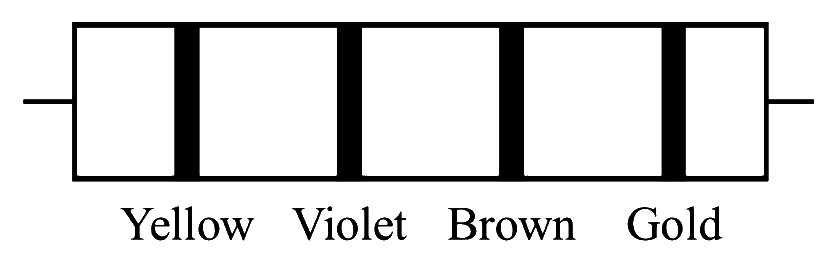
The values of resistance and tolerance, respectively, are
Answer: (c)
Ohm's Law, Resistivity & Temperature · Resistivity: R = ρl/A
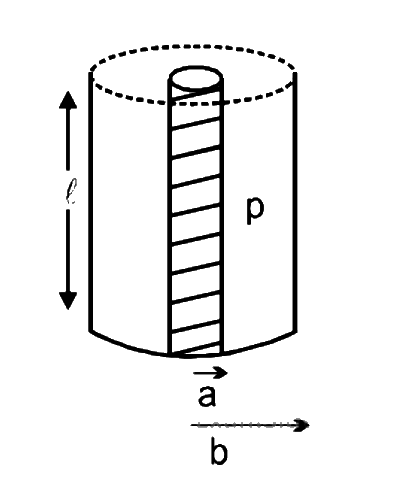
Model a torch battery of length to be made up of a thin cylindrical bar of radius ‘a’ and a concentric thin cylindrical shell of radius ‘b’ filled in between with an electrolyte of resistivity (see figure). If the battery is connected to a resistance of value R, the maximum Joule heating in R will take place for:
Answer: (c)
Ohm's Law, Resistivity & Temperature · Ohm's law & V–I graphs
For a metallic wire, the ratio of voltage to corresponding current is
Answer: (b)
Ohm's Law, Resistivity & Temperature · Colour code
A 200 resistor has a certain color code. If one replaces the red color by green in the code, the new resistance will be:
Answer: (a)
Ohm's Law, Resistivity & Temperature · Colour code
A carbon resistance has a following colour code. What is the value of the resistance?
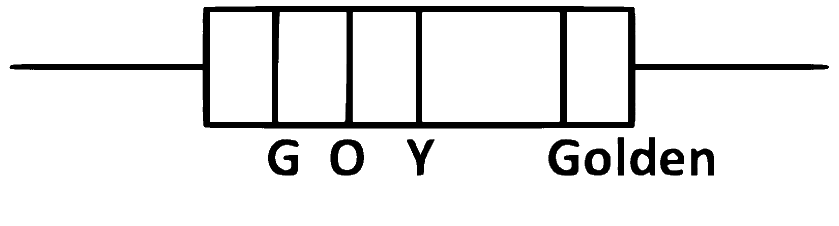
Answer: (a)
Ohm's Law, Resistivity & Temperature · Colour code
A resistance is shown in the figure. Its value and tolerance are given respectively by:
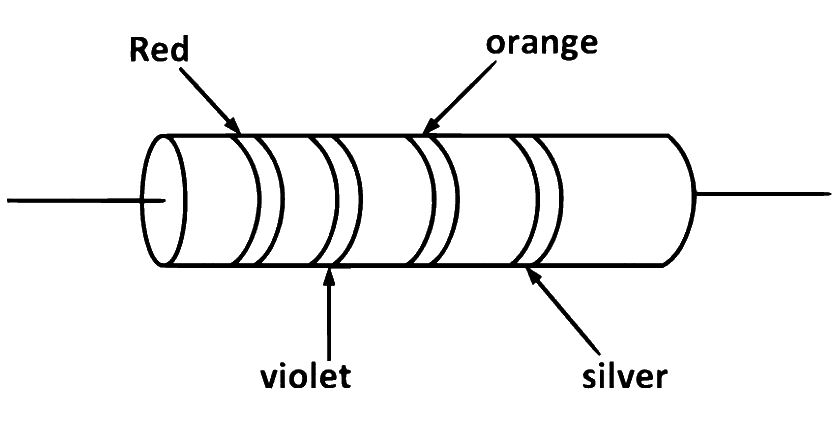
Answer: (b)
Ohm's Law, Resistivity & Temperature · Stretching & reshaping a wire
A copper wire is stretched to make it 0.5% longer. The percentage change in its electrical resistance if its volume remains unchanged is:
Answer: (c)
Ohm's Law, Resistivity & Temperature · Temperature dependence of resistance
In an experiment, the resistance of a material is plotted as a function of temperature (in some range). As shown in the figure, it is a straight line. One may conclude that:
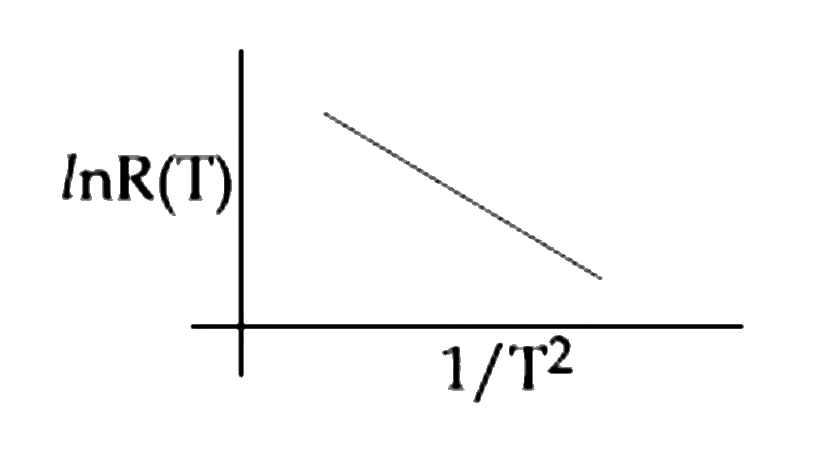
Answer: (d)
Ohm's Law, Resistivity & Temperature · Colour code
A 2 W carbon resistor is color coded with green, black, red and brown respectively. The maximum current which can be passed through this resistor is -
Answer: (b)
Ohm's Law, Resistivity & Temperature · Resistivity: R = ρl/A
Space between two concentric conducting spheres of radii a and b (b > a) is filled with a medium of resistivity . The resistance between the two spheres will be:
Answer: (d)
Ohm's Law, Resistivity & Temperature · Colour code
A carbon resistor of (47 4.7) k is to be marked with rings of different colours for its identification. The colour code sequence will be
Answer: (b)
Ohm's Law, Resistivity & Temperature · Temperature dependence of resistance
A heating element has a resistance of 100 at room temperature. When it is connected to a supply of 220 V, a steady current of 2 A passes in it and temperature is 500oC more than room temperature. What is the temperature coefficient of resistance of the heating element?
Answer: (d)
Ohm's Law, Resistivity & Temperature · Stretching & reshaping a wire
The resistance of a wire is 'R' ohm. If it is melted and stretched to 'n' times its original length. its new resistance will be
Answer: (b)
Ohm's Law, Resistivity & Temperature · Stretching & reshaping a wire
A uniform wire of length l and radius r has a resistance of 100 . It is recast into a wire of radius The resistance of new wire will be:
Answer: (a)
Ohm's Law, Resistivity & Temperature · Temperature dependence of resistance
The resistance of an electrical toaster has a temperature dependence given by R(T) = R0 [1 + (T − T0)] in its range of operation. At T0 = 300 K, R = 100 and at T = 500 K, R = 120 . The toaster is connected to a voltage source at 200 V and its temperature is raised at a constant rate from 300 to 500 K in 30 s. The total work done in raising the temperature is:
Answer: (c)
Ohm's Law, Resistivity & Temperature · Ohm's law & V–I graphs
Suppose the drift velocity d in a material varied with the applied electric field E as d . Then V - I graph for a wire made of such a material is best given by:
Answer: (c)
Ohm's Law, Resistivity & Temperature · Stretching & reshaping a wire
A wire of resistance 4 is stretched to twice its original length. The resistance of stretched wire would be
Answer: (b)
Ohm's Law, Resistivity & Temperature · Resistivity: R = ρl/A
Two rods are joined end to end, as shown. Both have a cross-sectional area of 0.01 cm2. Each is 1 6
meter long. One rod is of copper with a resistivity of 1.7 10 ohm-centimeter, the other is of iron 5
with a resistivity of 10 ohm-centimeter.
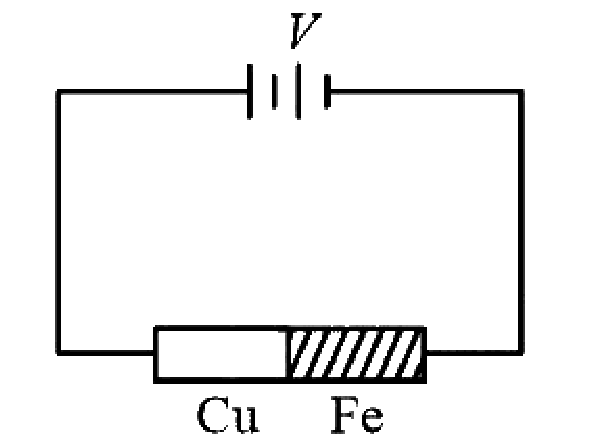
How much voltage is required to produce a current of 1 ampere in the rods?
Answer: (d)
Ohm's Law, Resistivity & Temperature · Stretching & reshaping a wire
If a wire is stretched to make it longer, its resistance will:
Answer: (a)
Ohm's Law, Resistivity & Temperature · Temperature dependence of resistance
Two conductors have the same resistance at but their temperature coefficients of resistance are and The respective temperature coefficients of their series and parallel combinations are nearly
Answer: (d)
Ohm's Law, Resistivity & Temperature · Temperature dependence of resistance
Statement - 1: The temperature dependence of resistance is usually given as The resistance of wire changes from to when its temperature is increased from to . This implies that
Statement - 2: is valid only when the change in the temperature is small and
Answer: (c)
Ohm's Law, Resistivity & Temperature · Stretching & reshaping a wire
A wire of a certain material is stretched slowly by ten percent. Its new resistance and specific resistance become respectively
Answer: (d)
Ohm's Law, Resistivity & Temperature · Resistivity: R = ρl/A
Consider a block of conducting material of resistivity shown in the figure. Current enters at and leaves from . We apply superposition principle to find voltage developed between and . The calculation is done in the following steps:
(i) Take current entering from and assume it to spread over a hemispherical surface in the block.
(ii) Calculate field at distance from A by using Ohm's law where is the current per unit area at .
(iii) From the dependence of , obtain the potential at .
(iv) Repeat (i), (ii) and (iii) for current leaving and superpose results for and
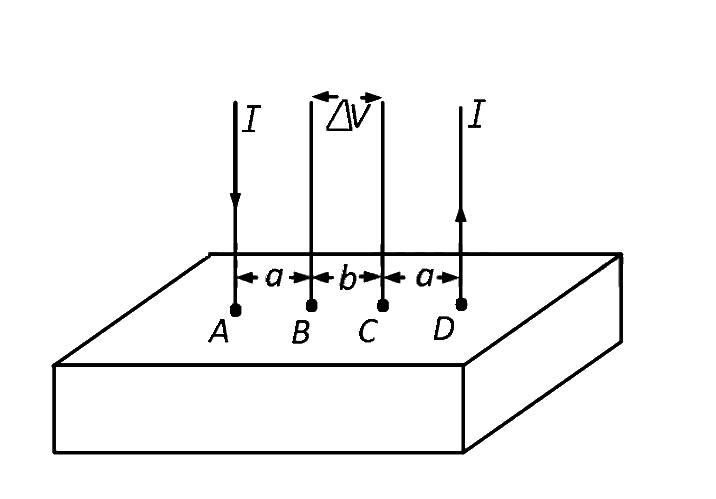
measured between and is
Answer: (a)
Ohm's Law, Resistivity & Temperature · Resistivity: R = ρl/A
Consider a block of conducting material of resistivity shown in the figure. Current enters at and leaves from . We apply superposition principle to find voltage developed between and . The calculation is done in the following steps:
(i) Take current entering from and assume it to spread over a hemispherical surface in the block.
(ii) Calculate field at distance from A by using Ohm's law where is the current per unit area at .
(iii) From the dependence of , obtain the potential at .
(iv) Repeat (i), (ii) and (iii) for current leaving and superpose results for and
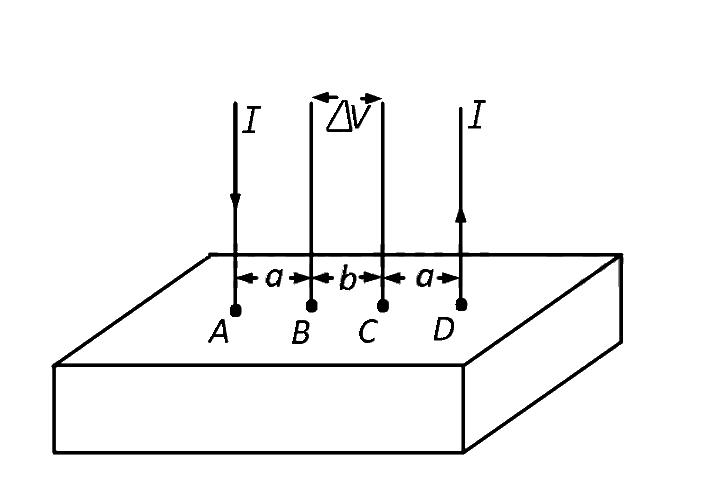
For current entering at the electric field at a distance from is
Answer: (c)
Ohm's Law, Resistivity & Temperature · Resistivity: R = ρl/A
The resistance of a wire is ohm at and ohm at The resistance of the wire at will be
Answer: (d)
Ohm's Law, Resistivity & Temperature · Resistivity: R = ρl/A
A material 'B' has twice the specific resistance of 'A'. A circular wire made of 'B' has twice the diameter of a wire made of 'A'. Then for the two wires to have the same resistance, the ratio of their respective lengths must be
Answer: (a)
Ohm's Law, Resistivity & Temperature · Temperature dependence of resistance
The resistance of bulb filament is at a temperature of If its temperature coefficient of resistance be per , its resistance will become at a temperature of
Answer: (b)
Ohm's Law, Resistivity & Temperature · Resistivity: R = ρl/A
A material has twice the specific resistance of A circular wire made of has twice the diameter of a wire made of . Then for the two wires to have the same resistance, the ratio of their respective lengths must be
Answer: (d)
Ohm's Law, Resistivity & Temperature · Stretching & reshaping a wire
The electric resistance of a certain wire of iron is R. If its length and radius are both doubled, then
Answer: (b)
Ohm's Law, Resistivity & Temperature · Temperature dependence of resistance
Thermistors are usually made of
Answer: (a)
Ohm's Law, Resistivity & Temperature · Stretching & reshaping a wire
The length of a given cylindrical wire is increased by . Due to the consequent decrease in diameter the change in the resistance of the wire will be
Answer: (d)
Ohm's Law, Resistivity & Temperature · Resistivity: R = ρl/A
Specific resistance of a conductor increases with
Answer: (a)
Ohm's Law, Resistivity & Temperature · Temperature dependence of resistance
Copper and silicon is cooled from 300 K to 60 K, the specific resistance
Answer: (a)
Ohm's Law, Resistivity & Temperature · Ohm's law & V–I graphs
The resistance of a discharge tube is
Answer: (c)
Ohm's Law, Resistivity & Temperature · Ohm's law & V–I graphs
From the graph between current and voltage is shown below. Identify the portion corresponding to negative resistance
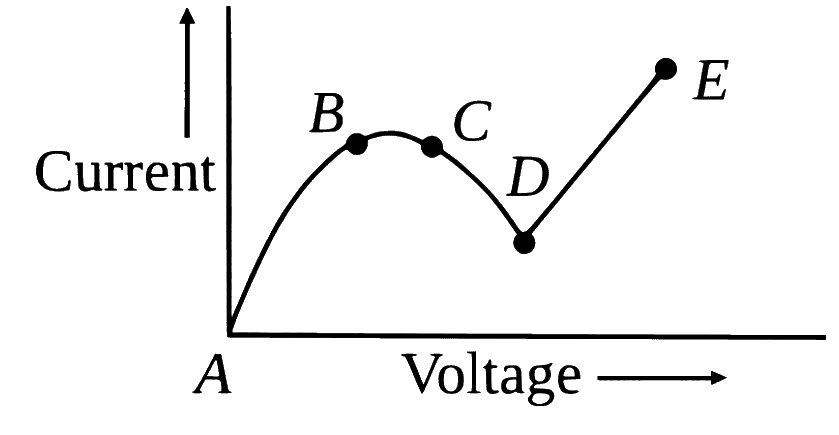
Answer: (a)
Ohm's Law, Resistivity & Temperature · Resistivity: R = ρl/A
Three copper wires of lengths and cross-sectional areas are and . Resistance is minimum in
Answer: (a)
Ohm's Law, Resistivity & Temperature · Resistivity: R = ρl/A
In good conductors of electricity, the type of bonding that exists is
Answer: (a)
Ohm's Law, Resistivity & Temperature · Resistivity: R = ρl/A
A wire long and in cross-section carries a current of when connected to a battery. The resistivity of the wire is
Answer: (b)
Ohm's Law, Resistivity & Temperature · Resistivity: R = ρl/A
Identify the set in which all the three materials are good conductors of electricity
Answer: (c)
Ohm's Law, Resistivity & Temperature · Resistivity: R = ρl/A
The masses of the wires of copper is in the ratio of and their lengths are in the ratio of . The ratio of their electrical resistance is
Answer: (d)
No questions match these filters.