
Hysteresis, Soft Iron vs Steel & Shielding · Soft iron vs steel: choice of material
Soft iron is used in making an electromagnet because
Show answer and solution
Answer: (d)
Loading the solution…
Home›Practice Hub›Chapters›Magnetic Properties of Materials›Hysteresis, Soft Iron vs Steel & Shielding
Magnetic Properties of Materials PYQs · MHT CET · JEE Main · NEET
Hysteresis, Soft Iron vs Steel & Shielding · Soft iron vs steel: choice of material
Soft iron is used in making an electromagnet because
Answer: (d)
Hysteresis, Soft Iron vs Steel & Shielding · Hysteresis curve: retentivity & coercivity
Magnetic hysteresis is exhibited by magnetic materials which are
Answer: (c)
Hysteresis, Soft Iron vs Steel & Shielding · Magnetic shielding
To protect the instrument from magnetic field, it is completely surrounded by
Answer: (a)
Hysteresis, Soft Iron vs Steel & Shielding · Hysteresis curve: retentivity & coercivity
In the following graph of flux density versus magnetizing force, coercivity and retentivity are respectively represented by the points
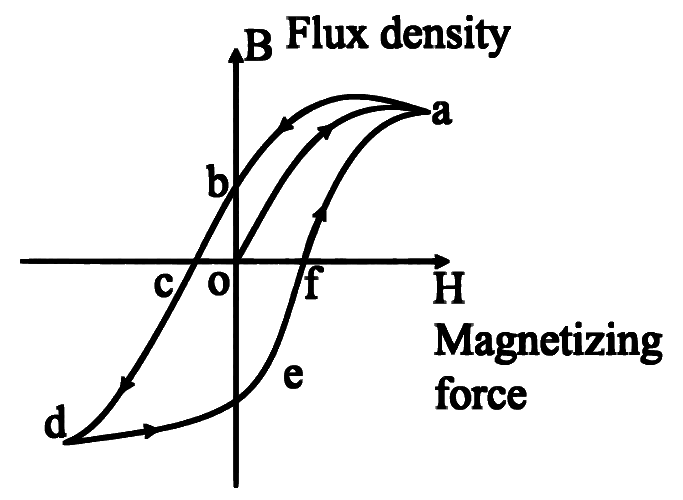
Answer: (a)
Hysteresis, Soft Iron vs Steel & Shielding · Demagnetising current
The coercivity of a magnet is . The amount of current required to be passed in a solenoid of length and the number of turns 150, so that the magnet gets demagnetised when inside the solenoid is ________ A.
Numerical answer type. Work it out, then open the answer.
Answer: 10
Hysteresis, Soft Iron vs Steel & Shielding · Hysteresis curve: retentivity & coercivity
In the hysteresis curve the value of magnetization (B) which will be present in a substance when value of magnetizing force is made zero is called as
Answer: (b)
Hysteresis, Soft Iron vs Steel & Shielding · Demagnetising current
The current required to be passed through a solenoid of 15 cm length and 60 turns in order of demagnetise a bar magnet of magnetic intensity is ___________ A.
Numerical answer type. Work it out, then open the answer.
Answer: 6
Hysteresis, Soft Iron vs Steel & Shielding · Soft iron vs steel: choice of material
The materials suitable for making electromagnets should have
Answer: (b)
Hysteresis, Soft Iron vs Steel & Shielding · Soft iron vs steel: choice of material
Given below are two statements: one is labelled as Assertion and the other is labelled as Reason
Assertion A: Electromagnets are made of soft iron.
Reason R: Soft iron has high permeability and low retentivity.
In the light of above, statements, choose the most appropriate answer from the options given below.
Answer: (a)
Hysteresis, Soft Iron vs Steel & Shielding · Magnetic shielding
Magnetic shielding is done by surrounding the instrument to be protected from magnetic field by
Answer: (a)
Hysteresis, Soft Iron vs Steel & Shielding · Soft iron vs steel: choice of material
The soft-iron is a suitable material for making an electromagnet. This is because soft-iron has
Answer: (c)
Hysteresis, Soft Iron vs Steel & Shielding · Hysteresis curve: retentivity & coercivity
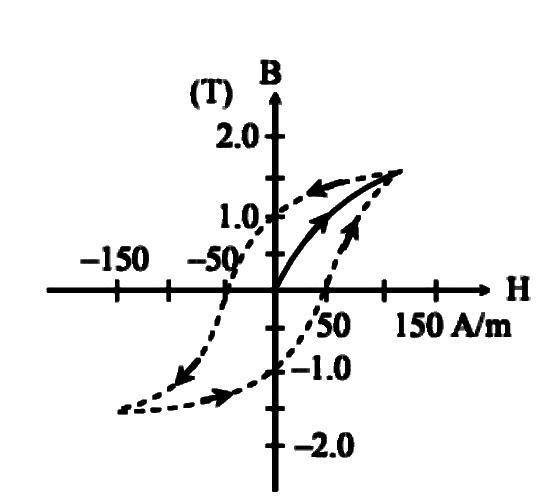
The figure gives experimentally measured B vs H variation in a ferromagnetic material. The retentivity, coercivity and saturation, respectively, of the material are:
Answer: (a)
Hysteresis, Soft Iron vs Steel & Shielding · Soft iron vs steel: choice of material
Magnetic materials used for making permanent magnets (P) and magnets in a transformer (T) have different properties of the following, which property best matches for the type of magnet required?
Answer: (b)
Hysteresis, Soft Iron vs Steel & Shielding · Demagnetising current
A bar magnet is demagnetized by inserting it inside a solenoid of length 0.2 m, 100 turns, and carrying a current of 5.2 A. The coercivity of the bar magnet is:
Answer: (b)
Hysteresis, Soft Iron vs Steel & Shielding · Demagnetising current
The curve for a ferromagnet is shown in the figure. The ferromagnet is placed inside a long solenoid with turns/cm. The current that should be passed in the solenoid to demagnetise the ferromagnet completely is:
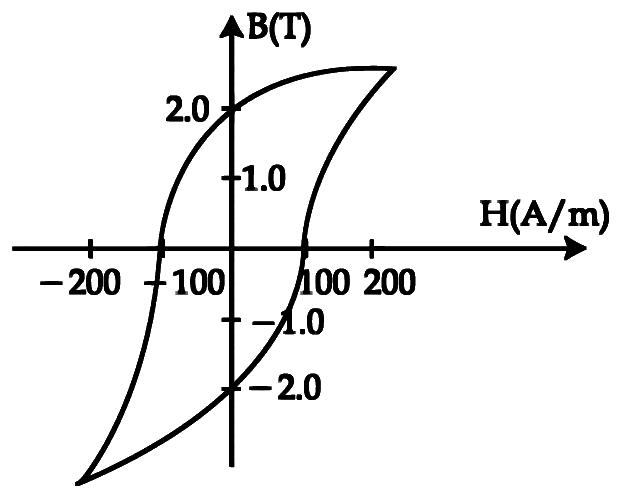
Answer: (a)
Hysteresis, Soft Iron vs Steel & Shielding · Soft iron vs steel: choice of material
Hysteresis loops for two magnetic materials and are given below:
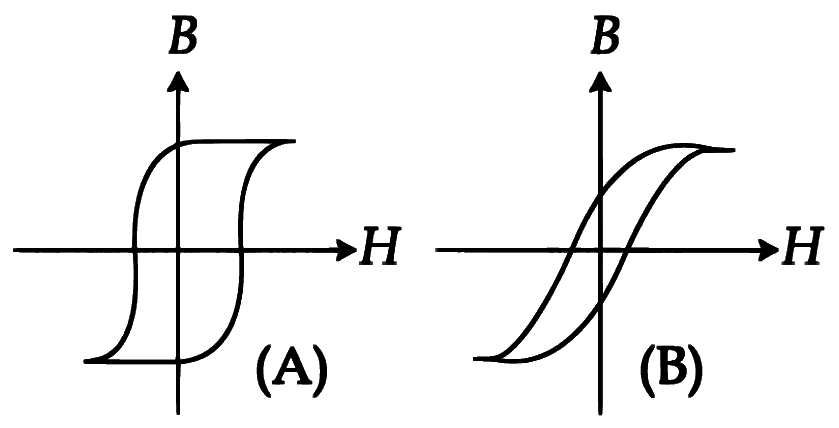
These materials are used to make magnets for electric generators, transformer core and electromagnet core. Then it is proper to use:
Answer: (b)
Hysteresis, Soft Iron vs Steel & Shielding · Demagnetising current
The coercivity of a small magnet where the ferromagnet gets demagnetized is The current required to be passed in a solenoid of length and number of turns so that the magnet gets demagnetized when inside the solenoid, is:
Answer: (c)
Hysteresis, Soft Iron vs Steel & Shielding · Soft iron vs steel: choice of material
Electromagnets are made of soft iron because soft iron has
Answer: (c)
Hysteresis, Soft Iron vs Steel & Shielding · Soft iron vs steel: choice of material
The materials suitable for making electromagnets should have
Answer: (b)
Hysteresis, Soft Iron vs Steel & Shielding · Magnetic shielding
For protecting a sensitive equipment from the external magnetic field, it should be
Answer: (b)
No questions match these filters.